



Automotive Battery Management System Market Forecast 2025–2035 | BMS Architecture Types | Core Functions | Regional Analysis | March 2026 | Source: MRFR Automotive BMS Market Report
| Key Takeaways
• Market valued at USD 6,073.51 billion in 2024 — projected to reach USD 41,617.95 billion by 2035. • CAGR of 19.1% — the highest growth rate of any core automotive electronics segment. • AI-powered, wireless, and cloud-connected BMS are displacing conventional wired architectures. • Asia-Pacific dominates — China, South Korea, and Japan account for the majority of global BMS production. • Regulatory emission mandates and EV fleet targets across EU, US, India, and China are the structural growth engine. |
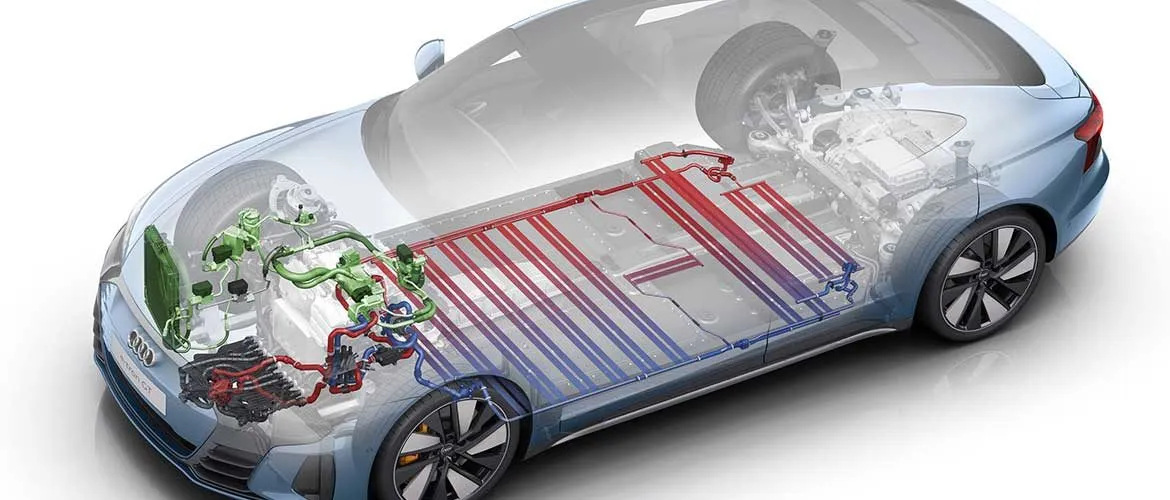
The battery management system is the brain of every electric vehicle — monitoring cell health, preventing thermal runaway, optimising range, and determining how long a battery pack lasts. As EV adoption accelerates globally, the BMS market is growing at a 19.1% CAGR through 2035 — the fastest rate of any core automotive electronics segment. The technology is also evolving rapidly, with AI, wireless architectures, and cloud connectivity redefining what a BMS can do.
| Get the full data — free sample available:
→ Download Free Sample PDF — Automotive BMS Market Report Includes market sizing, architecture segmentation, and regional forecast tables. |
Market size and forecast (2024–2035)
The global automotive BMS market was valued at USD 6,073.51 billion in 2024 and is projected to reach USD 41,617.95 billion by 2035 at a CAGR of 19.1%, per MRFR analysis. This exceptional growth reflects the structural shift to electrification across passenger, commercial, and two-wheeler vehicle segments — with every EV sold requiring a BMS, and next-generation vehicles demanding significantly more sophisticated systems than current-generation platforms.
BMS architecture types — which system fits which vehicle?
Architecture selection determines cost, weight, scalability, and the level of intelligence a BMS can deliver. Here is a direct comparison of all major types:
| BMS Type | Architecture | Best For | Key Advantage | Trend |
| Centralised | Single master unit controls all cells | Small battery packs, entry-level EVs | Low cost, simple design | Declining |
| Modular / Distributed | Multiple sub-controllers linked to master | Mid-to-large packs, commercial EVs | Scalable, fault isolation per module | Dominant |
| Wireless BMS | No physical wiring between cell controllers | Large packs, weight-sensitive platforms | Weight reduction, assembly simplification | Fastest growing |
| Cloud-Connected | IoT-linked BMS with remote monitoring & OTA updates | Fleet management, commercial vehicles | Real-time analytics, predictive maintenance | Rapidly growing |
| AI-Integrated | ML models run on-device for adaptive optimisation | Performance EVs, next-gen platforms | Extended battery life, predictive failure | Emerging |
Key market shift: Wireless BMS is crossing the adoption threshold — Texas Instruments, Analog Devices, and Infineon have all launched production-ready wireless BMS silicon. The technology eliminates wiring harnesses that can weigh 1–3 kg per vehicle, simplifies assembly, and significantly improves pack-level reliability. Cloud-connected and AI-integrated BMS are becoming standard specifications for premium and commercial EV platforms.
What does a BMS actually do? Core functions explained
A BMS performs six critical functions simultaneously — each essential to EV safety, performance, and longevity:
| BMS Function | What It Does | Why It Matters |
| Cell Monitoring | Tracks voltage, current, and temperature of every cell in real time | Prevents overcharging, deep discharge, and thermal runaway |
| State of Charge (SOC) | Calculates remaining battery capacity as a percentage | Drives range estimation accuracy — critical for driver confidence |
| State of Health (SOH) | Tracks battery degradation over time and charge cycles | Enables predictive maintenance and warranty management |
| Cell Balancing | Equalises charge levels across all cells to maximise capacity | Extends pack lifespan by preventing premature cell failure |
| Thermal Management | Controls cooling or heating systems to maintain optimal temperature | Prevents thermal runaway — the primary EV battery safety risk |
| Fault Detection | Identifies and isolates faults; triggers safety cutoffs if needed | Protects occupants and prevents cascading battery failure |
What is driving automotive BMS demand?
- Global EV mandate acceleration: The EU’s 2035 ICE ban, China’s NEV targets, India’s FAME scheme, and the US IRA EV tax credits are all creating structural, policy-driven demand for BMS at scale. Every EV produced requires at least one BMS — creating a direct multiplier on vehicle production volumes.
- Lithium-ion energy density increases: As battery packs grow in capacity — from 40 kWh economy EVs to 100+ kWh performance platforms — the complexity of cell monitoring, balancing, and thermal management grows proportionally, requiring more sophisticated BMS solutions.
- Battery second-life and recycling economics: Accurate SOH tracking enabled by advanced BMS is essential for EV battery repurposing (vehicle-to-grid, stationary storage) and recycling programmes. This is becoming a regulatory requirement in the EU and creates BMS data value beyond the vehicle’s operational life.
- Fleet electrification and telematics: Commercial fleet operators require cloud-connected BMS that integrates with telematics platforms — enabling remote battery health monitoring, predictive maintenance scheduling, and optimal charging strategy management across hundreds of vehicles simultaneously.
- Solid-state battery readiness: Next-generation solid-state batteries will require entirely new BMS architectures due to their different charging profiles, temperature sensitivities, and failure modes. Early investment in advanced BMS platforms positions suppliers for the post-lithium-ion transition.
Regional market breakdown
Asia-Pacific dominates both production and adoption; North America and Europe are driven by regulatory mandates and premium EV platform investment.
| Region | Maturity | Key Drivers | Outlook |
| Asia-Pacific | Advanced | China EV mandate, Korea/Japan battery tech leadership, India FAME | Dominant — highest volume and CAGR globally |
| North America | Mature | IRA EV incentives, Tesla ecosystem, fleet electrification | Strong; AI-BMS and wireless architecture investment |
| Europe | Mature | EU 2035 ICE ban, carbon targets, German/Scandinavian OEM leadership | Strong; premium and solid-state BMS development |
| Middle East & Africa | Emerging | EV infrastructure investment, sovereign EV fleet programmes | Niche but accelerating; Saudi, UAE programmes |
| Latin America | Emerging | Brazil EV adoption, hybrid vehicle growth, fleet electrification | Moderate; cost-sensitive, growing EV awareness |
India spotlight: India’s automotive BMS market is accelerating across three segments — electric two-wheelers (the world’s largest market by volume), electric three-wheelers and commercial vehicles (growing rapidly under FAME II), and passenger EVs from domestic OEMs and global brands. The government’s Advanced Chemistry Cell PLI scheme is also building domestic battery manufacturing capacity, creating upstream demand for locally-integrated BMS solutions rather than fully imported systems.
Competitive landscape
The market is led by Tesla (in-house BMS), LG Chem, Panasonic, Samsung SDI, BYD, A123 Systems, Bosch, Continental, and Daimler — with CATL emerging as a dominant integrated cell-and-BMS supplier globally. Semiconductor players including Texas Instruments, Analog Devices, NXP, and Infineon compete at the chip level, supplying the silicon that underpins most third-party BMS designs. Competition is intensifying around AI integration depth, wireless capability, OTA update architecture, and functional safety certification (ISO 26262 ASIL-D).
Outlook through 2035
Three forces will define the market: wireless BMS becoming standard on new EV platforms by 2028, AI-driven predictive battery management extending pack lifespans and unlocking second-life economics, and solid-state battery commercialisation creating a new BMS architecture requirement by 2030–2032. Suppliers who invest now in AI, wireless, and solid-state-compatible BMS platforms will lead the market’s most valuable segments through the decade.
| Access complete forecasts, architecture segmentation & competitive intelligence:
→ Purchase the Full Automotive BMS Market Report (2025–2035) 10-year forecasts | Architecture & vehicle-type segmentation | Regional data | Competitive landscape | 150+ pages |
Related market reports
- Driver Monitoring System Market
- Motorcycle Parts and Accessories Market
- Automotive Wheel Rims Market
- Automotive Carbon Canister Market
- SUV and Truck Exterior & Outdoor Accessories Market
- Off-Highway Vehicle Door Closures Market
- Browse All MRFR Reports
Market data sourced from Market Research Future (MRFR). Published March 2026. For custom research enquiries, contact MRFR here.